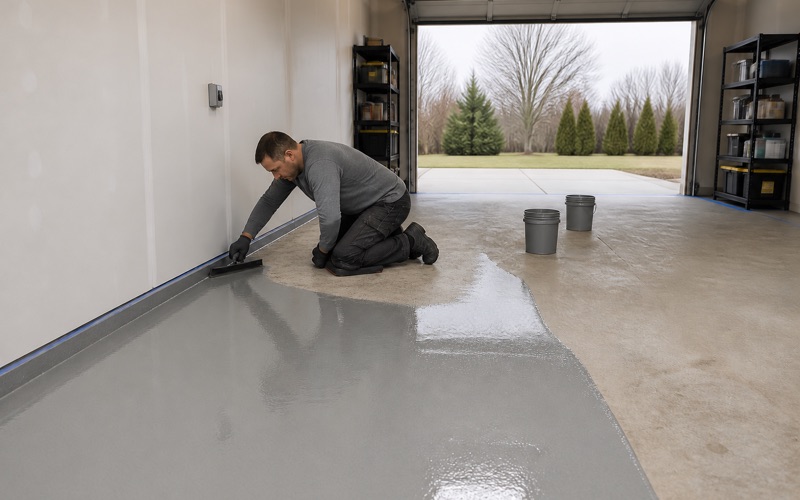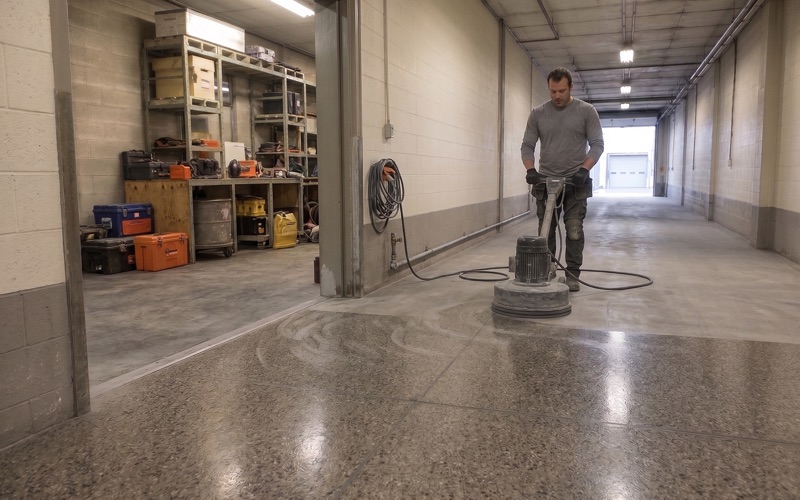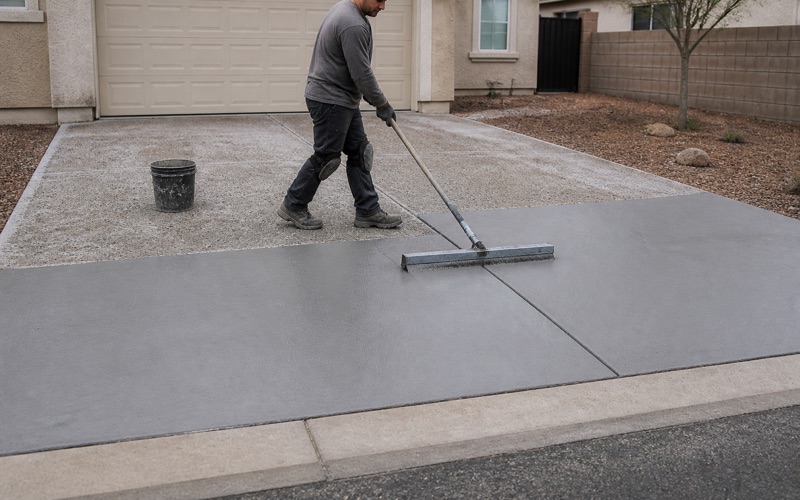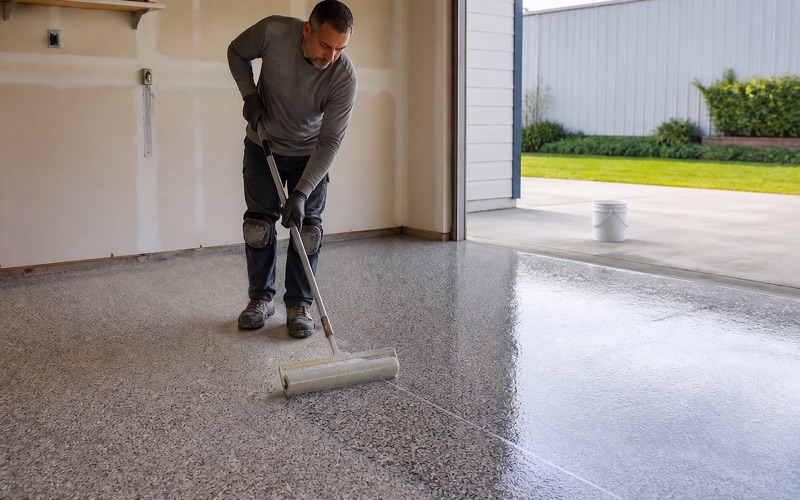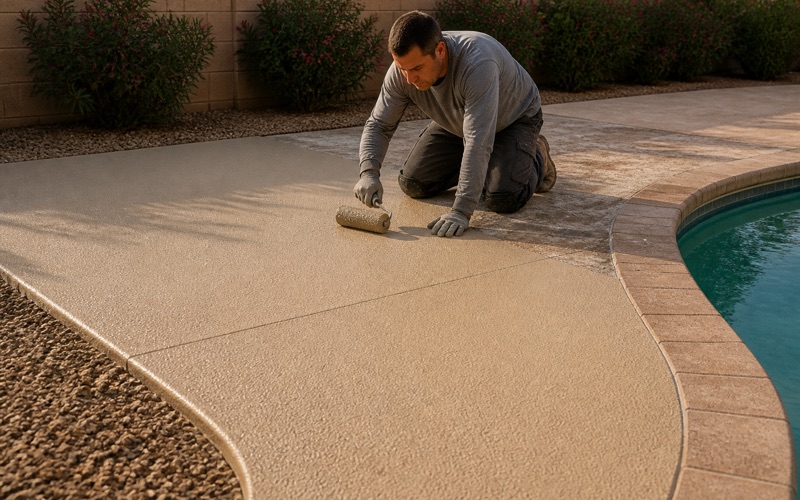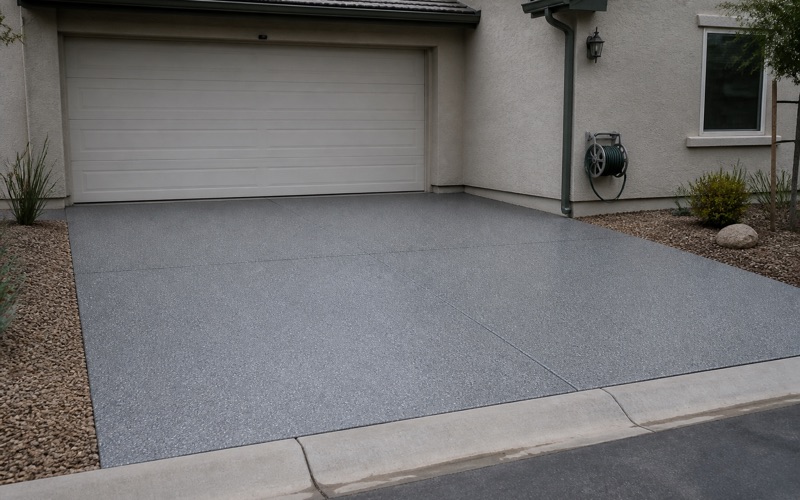
Colton Epoxy Flooring installs epoxy garage floor systems and commercial coatings in Rialto, CA, and the split between those two halves is wider here than almost anywhere else we work. We have spent more than twenty years on concrete in this valley, and Rialto is close enough to our base to make both the residential route and the industrial work practical on the same day.
Rialto describes itself accurately as a warehouse city. Its own major-employer list runs to Niagara Bottling, Medline Industries, Angelus Block, Biscomerica, Amazon, FedEx and Target Distribution — six of seven in distribution or manufacturing — and the city holds over eighty warehouses with at least eight of them standing empty at any time.
That vacancy figure is not a sign of a weak market from where we sit. It is the clearest pipeline of floor work in the region, and it is worth explaining why. Understanding it also explains why our schedule here is less predictable than in a purely residential city: the work arrives when leases turn over rather than steadily through the year.
An Empty Warehouse Is a Floor About to Be Coated
Why Vacancy Means Work
A vacant high-cube building almost never goes to a new tenant as it stands. The slab gets inspected, cracks get repaired, joints get filled, and the floor is coated, sealed or hardened as part of the tenant improvement before anyone moves a rack into it. That work happens in the window between leases, which is exactly when the building is empty and accessible.
For a coating contractor that is the ideal job: an unoccupied building, no operating schedule to work around, full access to the whole slab at once, and a landlord or tenant improvement contractor who needs it finished to a date. It is the opposite of the phased, after-hours work an operating facility demands. It also means the whole floor can be treated as one continuous placement, which produces a more uniform result than a slab coated in sections over several weekends.
Joint Fill Is the Load-Bearing Decision
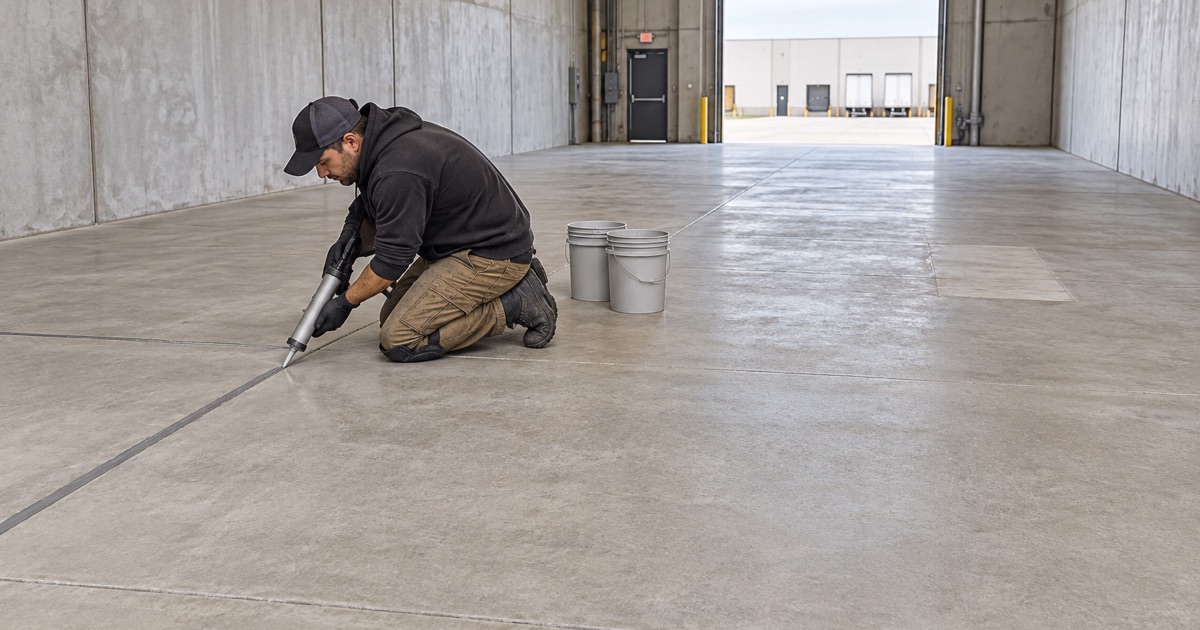
On a distribution floor the joints matter more than the coating does. Hard-wheeled forklifts and pallet jacks break down unprotected joint edges, and once an edge starts spalling it accelerates, because every wheel that crosses it hits a bigger step than the last one did. A semi-rigid filler supports those edges while still letting the joint move.
That is why we scope joint treatment as its own line rather than folding it into a square-foot rate. On a large slab it is frequently the item that determines how long the floor lasts, and it is the one most often left out of a cheaper quote. If two warehouse quotes differ substantially, the joint line is the first place worth looking, because it is invisible on the day and decisive after two years of forklift traffic.
Striping and What the Rule Actually Says
Aisle marking and color-coded zones are worth doing properly, and the standard cited for them is routinely misquoted. The federal requirement is that permanent aisles be appropriately marked where mechanical handling equipment is used; it specifies no stripe width and no color at all. The familiar two-inch yellow line comes from industry convention rather than from the regulation.
So we lay striping out to the racking plan and to the operator’s own safety program rather than to a number somebody repeated. That usually produces a more useful layout than a generic one, because it follows how the building actually moves. It also avoids the situation where a striping layout inherited from a previous tenant no longer matches where the racking now stands.
Looking for polished concrete flooring closer to San Bernardino? See San Bernardino Polished Concrete Flooring.
Not Every Industrial Floor Is the Same Floor
High-Cube Distribution Slabs
The big distribution buildings want abrasion and impact resistance, joint protection, crack repair and traffic striping, all delivered over an existing power-troweled slab. The specification starts from wheel material and traffic pattern rather than from appearance, and the finish is chosen for how it wears rather than for how it looks on day one. Appearance matters least in this building type and durability matters most, which is a refreshing brief to work to.
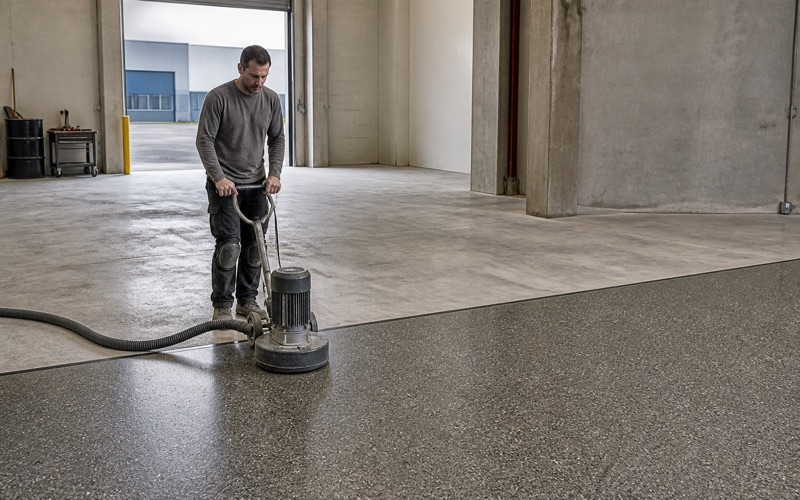
Large areas are shot blasted rather than ground, because steel media opens a deeper and more uniform profile far faster across open floor. Edges, corners and the areas around racking uprights and dock equipment still get cut in by hand, since a blaster cannot reach them. That hand work is slow and it is where large floors are most often let down, so we scope it explicitly rather than absorbing it into a rate.
Bottling and Food Production Floors
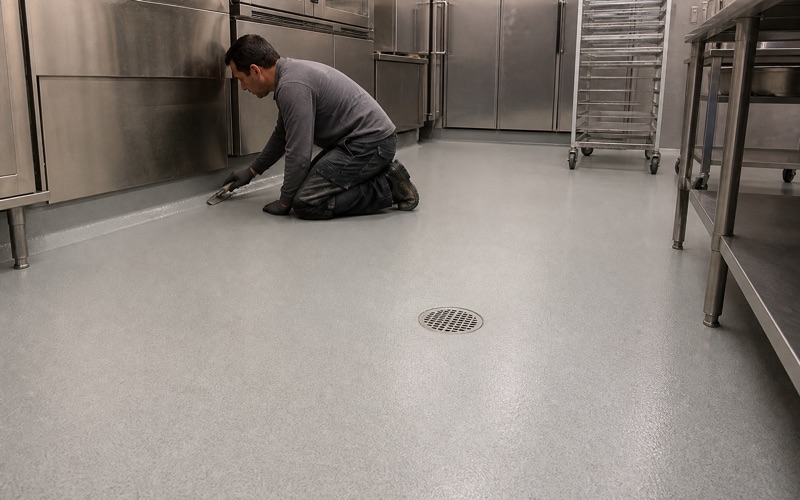
Wet production environments are a different specification entirely. A bottling line or a food plant floor takes standing water, hot water, cleaning chemistry and thermal shock, and it needs cleanability and a coved detail at the wall rather than decoration.
In the hottest and wettest of those rooms urethane cement outperforms epoxy substantially, because its thermal expansion behaves much more like the concrete beneath it. We will say so rather than sell an epoxy into a room that will delaminate it, and that conversation is better had at quoting than after. Selling the wrong system into a wet, hot room is a short-term win that becomes a warranty argument, and we would rather not have either.
Battery Rooms, Docks and Turning Zones
Individual areas inside a warehouse need their own answer. A battery-charging room wants acid resistance and containment detailing, a dock apron takes weather and the heaviest point loading in the building, and the zone where pallet jacks pivot wears in a pattern nothing else matches.
Quoting one product across an entire slab ignores all of that. We map those areas separately, because the alternative is a floor that fails in three places long before the rest of it needs attention. Those three areas are also the ones an operator notices first, which makes getting them right disproportionately valuable to the relationship.
The Residential Half Runs Differently Here
Younger Slabs Than the Cities Nearby
Rialto’s housing is noticeably newer than its neighbors’. Only 18.7% predates 1960 and just 1.8% predates 1940, which means the pre-vapor-retarder moisture story that dominates the older cities around here is the exception rather than the expectation on a Rialto garage.
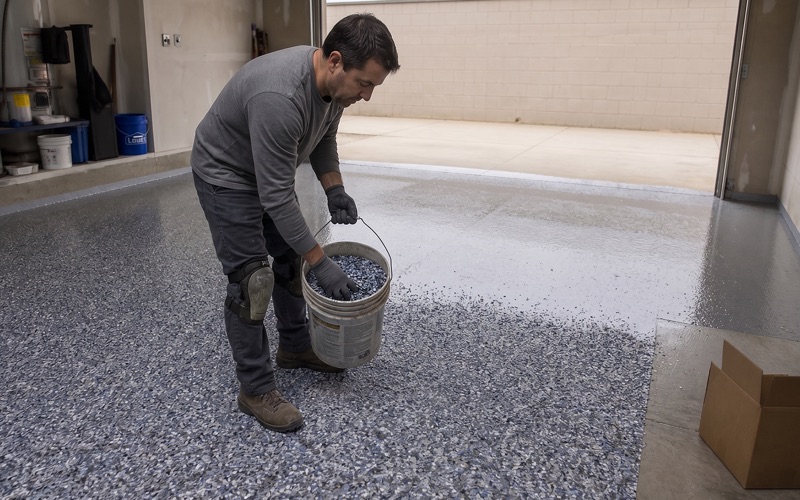
That makes the residential work more predictable. A great many of these jobs are a straightforward grind, joint fill, prime, broadcast and topcoat, with the slab behaving as a modern slab should. That predictability is worth something to a homeowner too, because it means a quote given after a site visit rarely moves.
What We Still Test For
Newer does not mean exempt, and we test every slab regardless. The California Residential Code exempts garages from the under-slab vapor retarder requirement, so a garage may have nothing beneath it however recent the house is, and a reading costs very little against the price of a floor that has to come off.
We use the ASTM F1869 calcium chloride test for surface emission rate and the ASTM F2170 in-situ relative humidity probe for the slab at depth, with the threshold numbers read from ASTM F710 rather than from the test methods themselves. The test takes very little time and it is the only way to know whether the newer build date is doing the work people assume it is.
The Same Crew, Both Halves
The residential and industrial work here shares equipment, preparation method and judgment, which is why we do not treat them as separate businesses. A grinder that profiles a warehouse slab profiles a garage floor, and the person deciding a diamond bond against slab hardness is making the same call in both buildings. Hard concrete takes a soft diamond bond and soft concrete takes a hard one, and getting that backwards wastes either a day or a set of segments whichever building you are standing in.
What changes is scale, sequencing and product category. Rule 1113 draws a legal line between residential and industrial maintenance coatings at 50 and 100 grams per liter, and which side a building falls on is settled before we quote rather than assumed from the address. Rule 1113 treats those two categories as mutually exclusive, and subsection (c)(6) prohibits applying or soliciting industrial maintenance coatings for residential use, which is the part that catches people out on mixed-use property.
Sequencing, Access and Heat
Working Between Leases
The best warehouse floors we install are the ones booked before a building is marketed rather than after a tenant has signed. An empty slab with a known handover date lets us plan the preparation, the repair and the coating as one continuous program instead of fitting around a move-in.
Where that timing is not available we work with what exists, sequencing by bay against whatever access the schedule allows. It costs more in mobilization and it produces a floor with more joins in the program, which is worth knowing when comparing a quote given under each condition.
Getting Equipment Into the Building
Industrial access here is generally good — dock-height doors, level approaches and hardstanding — which makes moving a ride-on shot blaster and extraction plant straightforward. The constraints that do appear are power supply and the availability of a clear route through racking that has not yet been dismantled.
We confirm both during the site visit rather than on the morning of the work, because a blaster that cannot be powered or positioned turns a planned week into a wasted one.
Heat, Pot Life and Large Floors
Heat and a large floor are an uncomfortable pairing. With pot life falling from roughly 60 minutes at 55 degrees to about 20 at 95, the area that can be laid from a single batch shrinks sharply, and on a floor measured in tens of thousands of square feet that dictates how many people have to be mixing and spreading simultaneously.
We size the crew to the slab and the season rather than to habit, and where the area is too large to hold a wet edge in one pass we plan a deliberate break at a joint or a column line rather than letting one appear at random.
- 20+ Years Experience
- Free Estimates
- Every Slab Moisture Tested