
Colton Epoxy Flooring installs flake epoxy floors across Colton, CA, and the surrounding cities including Grand Terrace, Bloomington, Highgrove, Loma Linda and Rialto, with more than twenty years of experience building broadcast systems on valley slabs. Flake is the finish most of our residential garages end up with, and there are good reasons for that.
A flake floor is built by broadcasting vinyl chips into a wet epoxy body coat, then scraping back the excess and sealing it under a clear topcoat. What comes out is a thick, slightly textured, seamless-looking surface that hides dust, tire marks, minor slab repairs and everyday use.
It is also the system that gives the most control over appearance, because chip size, blend and broadcast density are all specified rather than left to chance. That means two people can choose visibly different floors from the same product range, and it means a quote can be compared line for line against another one.
How a Flake System Is Built
The Body Coat and the Broadcast
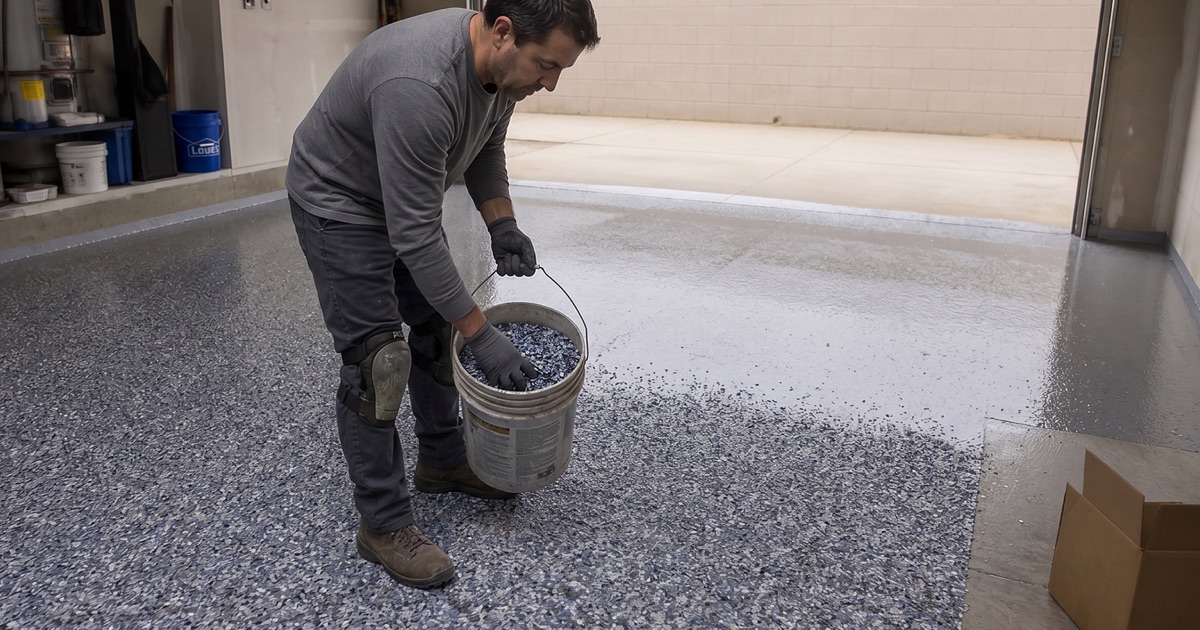
The floor is primed, then a pigmented epoxy body coat goes down and vinyl flake is broadcast into it while it is still wet. Timing matters — too early and the chips sink, too late and they do not key in — so the broadcast follows the spread closely across the slab rather than waiting for the whole floor. That is why a flake job needs enough hands on site to keep a wet edge moving across the whole area at once.
Scraping and Vacuuming Back
Once cured, the excess flake standing proud is scraped off and vacuumed away. This step is what produces the even texture and it is where a rushed job shows: under-scraping leaves a rough, sharp surface, and over-scraping cuts into the chips and dulls the color. It is slow, unglamorous work and it is the stage that most separates a good flake floor from a cheap one.
The Clear Topcoat
A clear polyaspartic or polyurea topcoat goes over the scraped surface, filling between the chips, locking them down and providing the wear surface. It is the topcoat rather than the flake that takes the abrasion, the hot tires and the cleaning, and it is what stops the floor ambering in daylight. On a garage whose door stands open for much of the day, that ultraviolet stability is not optional.
Specifying the Look
Full Broadcast Against a Light Scatter
A full broadcast throws chip to refusal until no base color shows through at all, producing an even, heavily textured, seamless appearance. A light or partial scatter leaves the base color visible between chips and reads speckled. Full broadcast costs more in material and labor and hides far more, including a repaired or patched slab.
Chip Size and What It Changes
Flake comes in a range of sizes, and the size changes the read of the floor more than people expect. Smaller chips give a fine, granite-like appearance and a subtler texture; larger chips give bolder pattern and a more pronounced surface. Larger chips also build slightly more thickness into the system. We generally recommend seeing sample boards in the actual garage rather than under showroom lighting, because chip size reads differently at floor level than in the hand.
Blends Are Named Products
Flake blends are sold under proper names rather than descriptions, which matters when you compare quotes. Two contractors offering a gray flake floor may be quoting different blends at different chip sizes and different broadcast rates. We put the blend name, the chip size and the broadcast rate in pounds per square foot into the written scope. Without those three numbers, two quotes are not describing the same floor even when they name the same color.
Why It Suits a Colton Garage
Texture and Slip Resistance
The chip broadcast leaves the surface with real texture rather than a slick sheet of resin, which matters on a floor that gets wet from a car or a hose. Where more grip is needed the topcoat can carry an aluminum oxide additive, and where a floor gets genuinely wet regularly, quartz broadcast is the step beyond flake. Quartz aggregate is larger, harder and builds a thicker system, and it gives a texture that a slip resistance figure can actually be quoted against.
Hiding What a Working Garage Does
Dust, tire marks, scuffing and the small imperfections of a slab that has been patched all disappear into a flake surface in a way they do not on a solid color or a metallic pour. On a garage that stores things and holds vehicles, that forgiveness is worth more day to day than maximum depth or gloss. It is also why we steer most first-time customers toward flake even when they arrive asking about metallic.
Covering a Repaired Slab
On Colton’s older stock a garage floor frequently needs joint filling, spall patching and crack repair before it is coated. Those repairs are sound but they are visible, and a full flake broadcast is the finish that reliably conceals them. It is often the deciding argument on a pre-war slab. Those older floors are the ones most likely to need repair in the first place, so the finish that conceals repair is doing double duty there.
- 20+ Years Experience
- Free Estimates
- Every Slab Moisture Tested